
- Your global expansion blueprint is flawless—in theory. It has succeeded almost identically in every western free market country. You have a superior product, a proven sales playbook, and cutting-edge CRM technology. Yet, in the high-growth markets of Africa, the Middle East, Latin America, and Southeast Asia, that blueprint often meets a frustrating reality: stalled deals, regulatory surprises, and local competitors who somehow move faster. This isn’t a failure of your product or team; it’s the predictable result of applying a centralized, one-size-fits-all approach to the world’s most nuanced and dynamic economies.
- This is where traditional methods are not merely insufficient; they are a liability. We serve as your embedded navigator, closing the context gap. We operate at the intersection of your corporate objectives and the granular reality on the ground. Our role is to map the invisible: identifying the true decision-makers, anticipating regulatory shifts before they are published, structuring deals that align with local business customs, and mitigating risks that never appear on a standard due diligence report. We ensure your market entry or expansion is not a series of costly experiments, but a precise, informed, and culturally intelligent operation.

ALL YOU SHOULD KNOW ABOUT MEDUSA SUBMARINE CABLE PROJECT
The Medusa submarine cable system is a massive, €342 million infrastructure project designed to create a new high-capacity digital highway across the Mediterranean Sea, fundamentally boosting connectivity between Europe and Africa . Led by the Barcelona-based telecom company AFR-IX Telecom, the project has strong backing from the European Union .
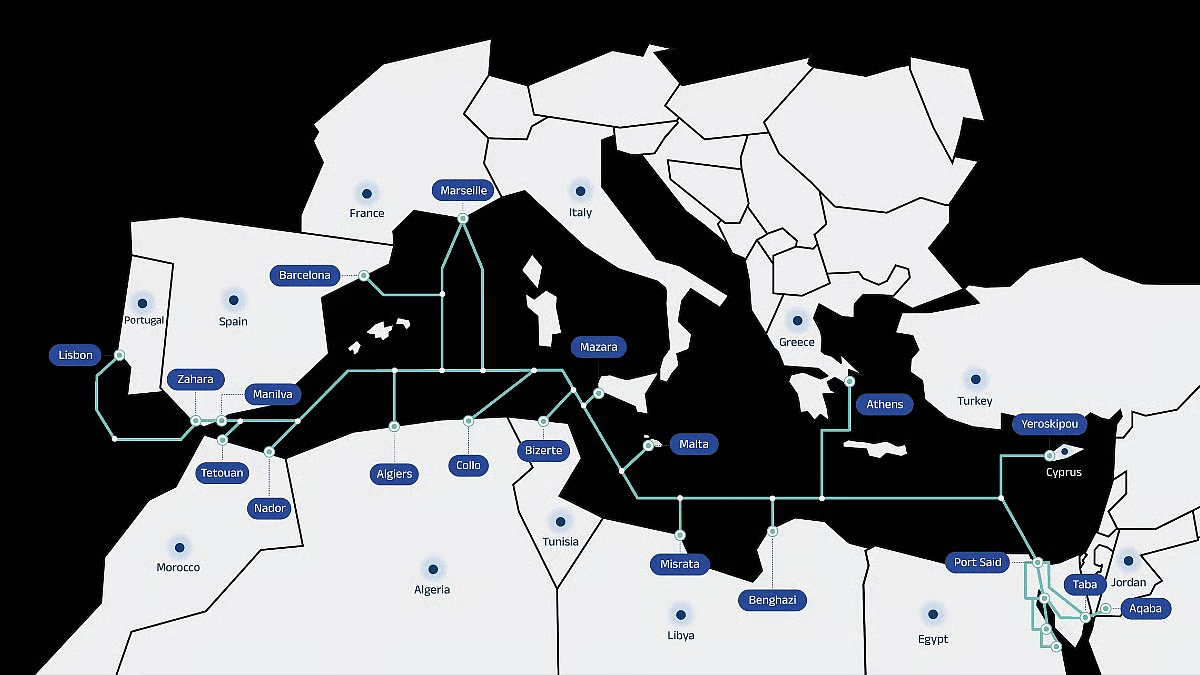
🌍 Route and Landing Points
The Medusa cable will feature 19 landing points across 12 countries, creating a ring-like structure around the Mediterranean and extending further . A later expansion is planned to extend the system down the West African coast to countries like Gabon .
Northern Mediterranean (Europe) :
- Portugal: Lisbon (Carcavelos area)
- Spain: Barcelona and Zahara
- France: Marseille
- Italy: Mazara del Vallo (Sicily)
- Greece: Tympaki (Crete)
- Cyprus: Yeroskipou
Southern Mediterranean (Africa) :
- Morocco: Nador and Tétouan
- Algeria: Algiers and Collo
- Tunisia: Bizerte
- Libya: Tripoli and Benghazi
- Egypt: Port Said (with onward connection via Telecom Egypt’s terrestrial network to the Red Sea)
- Future Expansion: Jordan, Syria, and West Africa (e.g., Gabon, Democratic Republic of Congo)
🏗️ Project Status and Key Milestones
The project has moved from planning into an active deployment phase, with several major milestones achieved in late 2025 .
- First Landing (October 2025): The cable’s first landing was completed in Marseille, France, a major European digital hub . Orange played a key role in this operation .
- Tunisia Connected (November 2025): The cable successfully landed in Bizerte, Tunisia, making it the first African country connected to the new system . Both Orange Tunisie and Tunisie Telecom are key partners for this branch .
- Morocco Landing (December 2025): The cable landed in Nador, Morocco, with support from Orange Morocco and inwi .
- Completion Timeline: The first segments (connecting France, Tunisia, and Morocco) are on track to be ready for service in early 2026. The remaining landings across the Mediterranean will be deployed throughout the year .
💡 Significance and Impact
The Medusa cable is more than just a new cable; it’s a strategic project with far-reaching implications:
- Enhanced Connectivity: By providing a new, high-capacity route (up to 480 Tbps), it will significantly increase internet speed and reliability for millions of people .
- Improved Resilience: It creates a diverse and redundant path for data traffic. If other cables are damaged, data can be rerouted through Medusa, enhancing the overall security and stability of the internet in the region .
- Digital Sovereignty: For North African countries like Tunisia and Algeria, the cable offers a direct, high-capacity link to Europe, reducing dependence on infrastructure routed through other nations and strengthening their digital independence .
- Economic Growth: The project is expected to spur investment in related sectors like data centers, cloud computing, and digital services, fostering economic development and job creation .
- Support for Advanced Tech: The high-capacity, low-latency link is crucial for supporting future technologies like 5G, AI, and the expansion of cloud infrastructure across the region .
- Connecting Research and Education: The project will also improve connectivity for nearly 500 education and research institutions in North Africa, linking them with their European counterparts .
WHY NO ONE IS TALKING ABOUT NEOM GREEN HYDROGEN PROJECT?
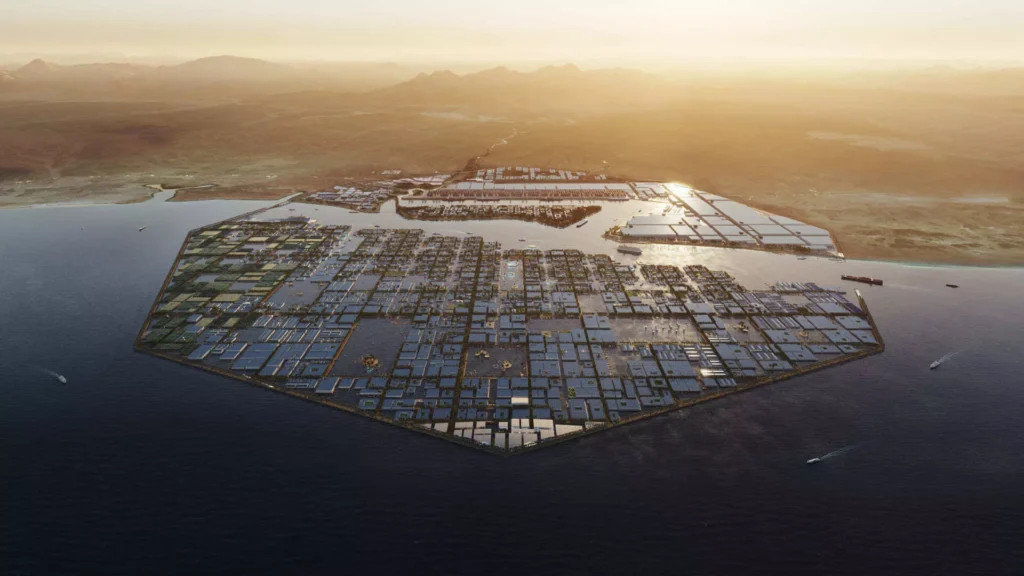
The project is a joint venture between three major players: Saudi Arabia’s ACWA Power, the U.S.-based industrial gas giant Air Products, and NEOM itself. The total investment for this first-of-its-kind facility is approximately $8.4 billion .
⚙️ Technical Specifications and Scale
The project integrates massive renewable energy generation with advanced hydrogen production technology.
- Location: The plant is situated in Oxagon, NEOM’s advanced clean industries city on the Red Sea coast, which provides strategic access for exports. The supporting solar and wind farms are located approximately 80 km and 120 km away, respectively .
- Power Supply: The entire facility will be powered by a dedicated 4 gigawatt (GW) renewable energy grid, combining solar and wind power .
- Production Capacity: It will produce up to 600 tonnes of carbon-free hydrogen per day. This hydrogen will be converted into 1.2 million tonnes of green ammonia annually for easier transportation and global export .
- Key Technology: The massive-scale electrolysis system, which splits water into hydrogen and oxygen, is based on technology from Thyssenkrupp. Air Products leads the engineering, procurement, and construction (EPC) .
📈 Current Status and Timeline
The project is advancing rapidly and is in its final construction phase.
- Construction Progress: As of early 2025, the project had surpassed 80% completion across all its core sites. The solar and wind energy infrastructure is over 95% complete .
- Timeline:
🌍 Offtake Agreements and Market Strategy
Securing buyers for this massive output is a critical component of the project.
- Primary Offtaker: Air Products has a 30-year agreement to be the exclusive off-taker of all green ammonia produced at the facility .
- Key Customer: A significant confirmed deal is with French energy company TotalEnergies. From 2030 to 2045, Air Products will supply TotalEnergies with 70,000 tonnes of green ammonia per year for use in its European refineries. This represents about one-third of the plant’s planned output .
- Sales Strategy: To accelerate revenue, Air Products plans to initially sell the ammonia directly on the global market. They are also in the final stages of negotiating another major ammonia sales agreement with Norway’s Yara International for up to 1.2 million tonnes per year .
💼 Economic and Social Impact
Beyond its environmental goals, the project is a significant economic driver for the region.
- Job Creation: It is expected to create between 300 and 350 direct, highly skilled jobs. Furthermore, it is projected to generate a multiplier effect, creating six to seven times that number in indirect jobs within supporting industries and services .
- Workforce Development: NGHC has already recruited much of its operations and maintenance staff and launched specialized training programs to prepare Saudi graduates for careers in the clean energy sector .
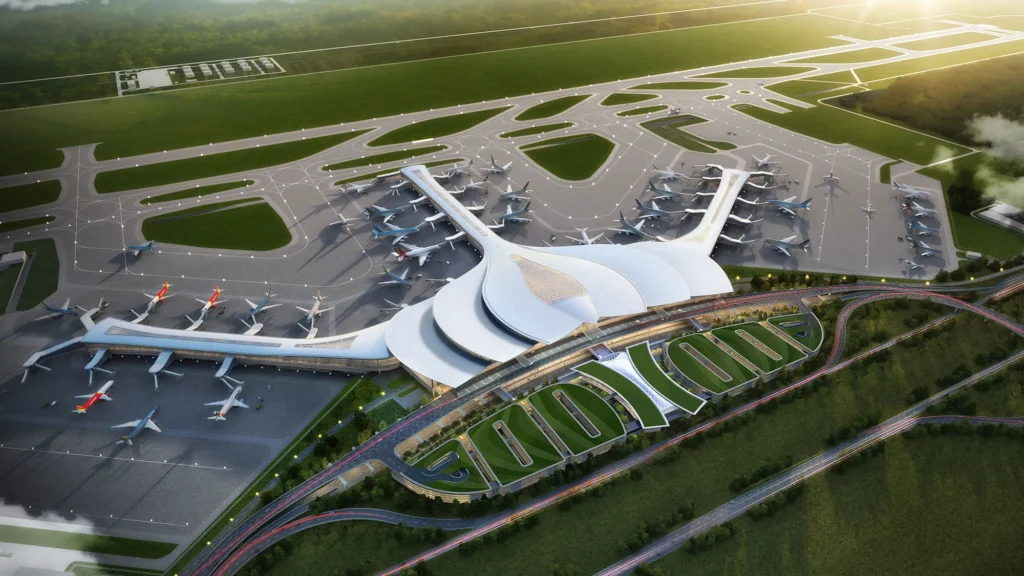
NO THE LONG THANH INTERNATIONAL AIRPORT IS NOT GOING TO BE JUST A REGULAR AIRPORT, RATHER A PIVOT HUB IN SOUTH EAST ASIA
The project in numbers
🏗️ Project Timeline and Current Status
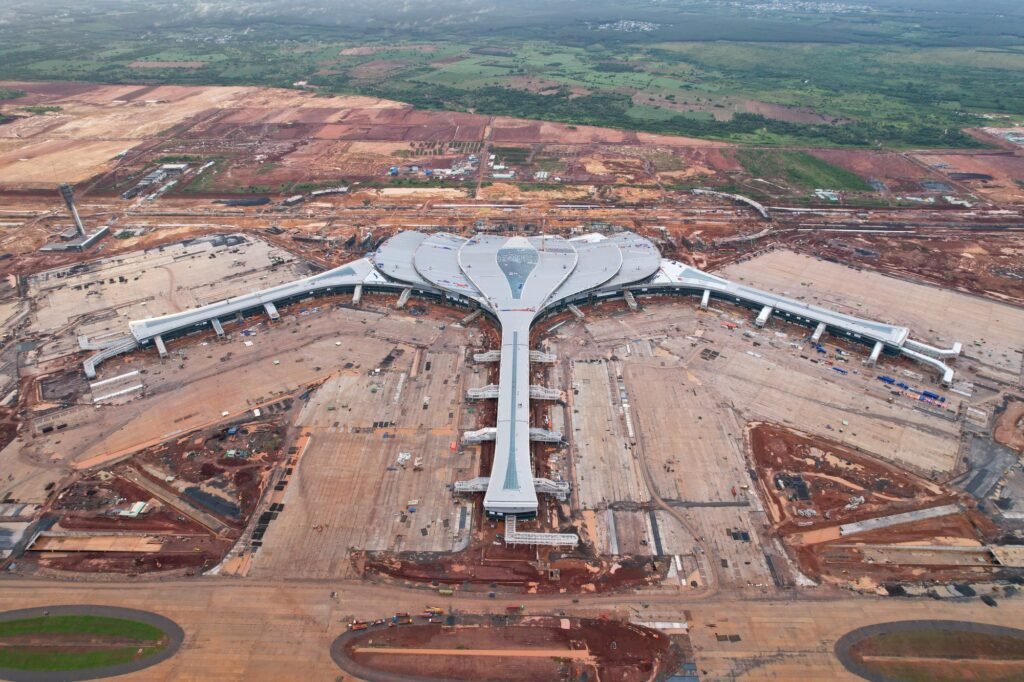
The project is being implemented in distinct phases, with the first nearing completion.
- Construction Start: Work on Phase 1 officially began in 2020 .
- Milestone Reached: The project’s first flights (testing/inaugural) landed in December 2025 .
- Urgent Directive: In late February 2026, the Prime Minister issued an urgent directive for all units to complete Phase 1 in the first half of 2026 . The goal is to begin commercial operations by the end of June 2026 .
- Financial Progress: By the end of 2025, unfinished construction costs for the Long Thanh project had reached VND 34,190 billion, a significant increase of over VND 21,400 billion from the start of the year .
- Enforcement: The government has emphasized strict accountability, stating that any violations affecting progress will be severely punished to avoid bottlenecks .
🛣️ Connectivity and Strategic Role
Significant efforts are underway to ensure the airport is well-connected and fulfills its strategic role.
- Pressure on HCMC Connectivity: Ho Chi Minh City is urgently accelerating connecting transport projects. Currently, travel from the city center can take over two hours due to reliance on congested highways. Key projects like the expansion of the HCMC-Long Thanh-Dau Giay expressway and Ring Road 3 are being prioritized for completion in 2026 .
- Flight Allocation Strategy: Under the approved plan, Long Thanh is expected to handle about 80% of international flights, while Tan Son Nhat (HCMC’s current airport) will focus on short-haul domestic and regional routes .
- Regional Ambitions: Once fully completed, Long Thanh aims to become a major international transit hub, competing with established airports like Singapore’s Changi and Bangkok’s Suvarnabhumi .
🔮 Future Expansion (Phase 2)
Due to faster-than-expected growth in air travel demand, plans for the next phase are being accelerated.
- Accelerated Timeline: Phase 2, previously scheduled for 2028-2032, is now being prepared for an earlier start. An early launch would allow the project to reuse labor and equipment from Phase 1, helping to cut costs .
- Phase 2 Scope: This phase will include the construction of a third runway and a second passenger terminal, each designed to handle an additional 25 million passengers per year
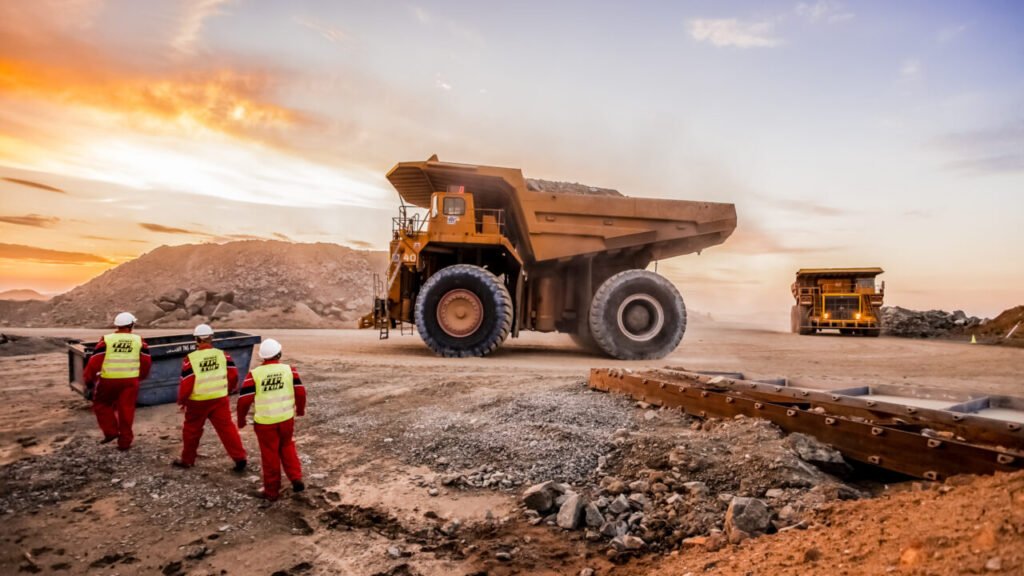
SET YOUR SIGHT ON THE GRANDE ORIENTALE IRON ORE IN D.R CONGO …IF YOU ARE IN MINING YOU CANNOT UNSEE THIS!
the Grande Orientale Iron Ore Project (MIFOR) in the Democratic Republic of Congo (DRC), based on the January 2026 government presentation.
📊 Project Overview & Key Numbers
🏗️ Project Scope and Infrastructure
The MIFOR project is designed as an integrated industrial and infrastructure complex, not just a mining operation. The $28.9 billion first phase includes:
- Large-Scale Extraction: Industrial mining of the high-grade ore body .
- Mineral Processing: On-site industrial processing units to begin value addition within the DRC .
- Multimodal Logistics Corridor: A critical component to connect the landlocked northeast to global markets. This includes:
🏛️ Strategic Importance and Current Status
- National Strategy: The DRC government bills MIFOR as a “national economic architecture project” to diversify its economy beyond copper and cobalt, create long-term sovereign assets, and stimulate balanced territorial development .
- Financing Interest: Authorities state the project has attracted interest from international institutional investors, though no specific names or binding agreements have been announced .
- Project Governance: An expanded inter-ministerial commission has been established to oversee the strategic management and phased development of the project .
⚠️ Key Uncertainties and Challenges
Several critical questions remain unresolved, as noted by multiple analysts :
- No Feasibility Study: The announced figures are not yet backed by an officially approved technical and economic feasibility study, which is a standard industry prerequisite .
- Resource vs. Reserve: The use of the term “resources” rather than the more definitive “reserves” indicates the project is at an early stage, and the economic viability of extracting all the material is not yet proven .
- Financing Plan: Details on the financing structure, the DRC government’s equity contribution, and the identity of potential private partners have not been disclosed .
- Implementation Timeline: No official timeline or construction schedule has been published .
- Infrastructure Challenge: Building a greenfield rail, river, and port logistics corridor on this scale in a remote region with limited existing infrastructure is a massive undertaking .
- Market Context: The project was announced shortly after first ore shipments from Guinea’s giant Simandou project, which could add significant supply to the seaborne iron ore market and potentially pressure prices